
An Arctic tourism framework
Care for the Arctic
Tourism businesses across the Yukon already care deeply about the places, communities, and experiences that make this territory unique. Care for the Arctic creates space for the tourism industry to explore what responsible, resilient, and community-minded tourism could look like in the Yukon moving forward.
Origins
What is Care for the Arctic?
Care for the Arctic is a collaborative framework for responsible and sustainable Arctic tourism, originally developed by the Arctic Sweden Visitors Board, and adopted across the Arctic Europe Tourism Cluster. It brings together Arctic destinations, tourism businesses, organizations, communities and visitors around a shared responsibility for protecting the places people visit while supporting strong, resilient Arctic communities.
Rather than a certification or tourism label, Care for the Arctic is an action-oriented framework and toolbox designed to help everyone involved in Arctic tourism make more informed and responsible choices.
The approach recognizes that sustainable Arctic tourism requires collaboration. It encourages practical action that supports environmental stewardship, local communities, responsible business practices and positive visitor behaviour.
By creating a shared approach to tourism development and destination stewardship, Care for the Arctic helps Arctic communities and tourism operators consider how tourism can create long-term social, economic and environmental benefits while protecting the natural and cultural qualities that make Arctic destinations unique.
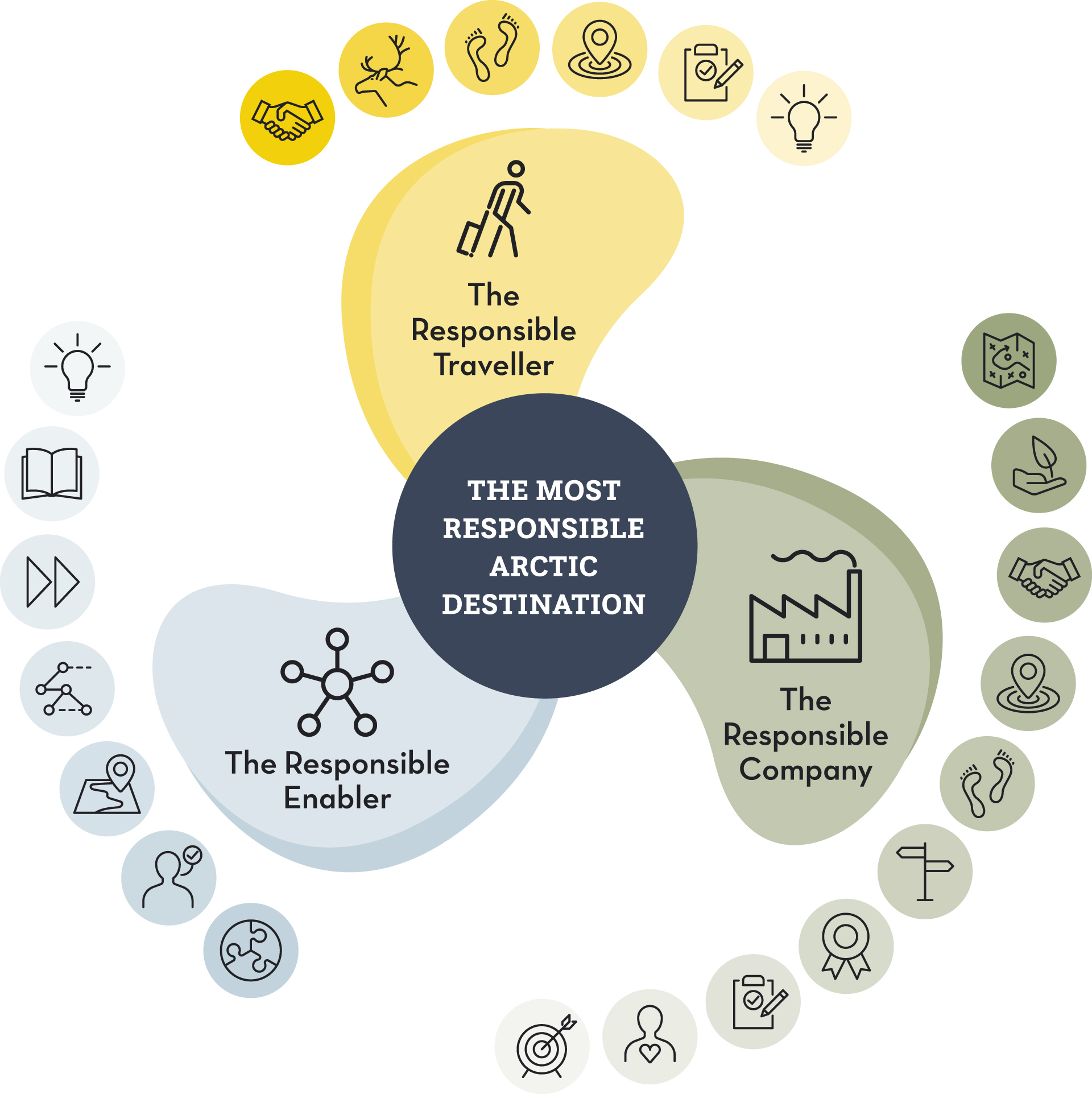
The Care for the Arctic framework was developed by the Arctic Sweden Visitors Board.
Why it matters
Why it matters in the Yukon
Tourism is an important part of the Yukon economy and supports businesses, jobs and communities across the territory. Visitors contribute to local accommodations, restaurants, transportation providers, tour operators, arts and cultural experiences, events, retail businesses and other services throughout the Yukon.
At the same time, tourism in the Yukon takes place within a rapidly changing northern environment. Climate change, evolving visitor expectations, infrastructure pressures, economic change and the need to protect culturally and environmentally significant places are influencing how tourism is developed and experienced.
Care for the Arctic provides a framework for thinking about how tourism can continue to create positive benefits for Yukon communities while respecting the land, cultures and people that make the territory unique.
For tourism businesses, organizations, destinations and visitors, this means considering not only how tourism grows, but how it can support strong local economies, meaningful visitor experiences, cultural respect, environmental stewardship and resilient communities over the long term.
In practice
How it works in the Yukon
The Care for the Arctic framework was introduced in the Yukon in 2026 to encourage ongoing conversations around stewardship, responsibility, collaboration, and long-term sustainability across the tourism industry.
The goal is to continue to learn, collaborate, and move forward together in ways that support the long-term future of tourism in the Yukon.
Arctic realities
Shared Arctic realities
The Yukon shares many of the same opportunities and challenges experienced by Arctic and northern tourism destinations around the world. These include changing environmental conditions, infrastructure limitations, seasonal economies, growing visitor interest, and the need to balance tourism development with long-term stewardship.
Care for the Arctic creates opportunities for Arctic destinations to learn from one another, share practical approaches, and build stronger tourism models while recognizing that every region is different. Effective tourism planning must remain grounded in local communities, Indigenous knowledge, cultural values, environmental conditions, and the priorities of the people who live there.
Rapidly changing environments
Including the impacts of climate change on landscapes, wildlife, travel seasons, and infrastructure.
Remote and northern infrastructure realities
Such as limited transportation options, higher operating costs, housing pressures, and seasonal access.
Strong Indigenous cultures and knowledge systems
Essential to understanding and respecting Arctic places.
Tourism growth balanced with stewardship
So increased visitation does not undermine the environment, culture, or quality of life in local communities.
Community resilience
Ensuring tourism contributes meaningful social and economic benefits.
Seasonal economies
Supporting more sustainable, year-round opportunities where appropriate.
Protecting what makes Arctic destinations unique
Including landscapes, cultures, traditions, and community character.
By sharing knowledge across Arctic regions while keeping decisions rooted in local realities, Care for the Arctic supports a more responsible and resilient approach to tourism development.
Here to help
Can’t find what you’re looking for?
If you’re looking for a specific resource or funding opportunity and cannot find it here, our team is happy to help point you in the right direction.